A friend held a contest to guess how many standard M&M’s are in a 1-liter Nalgene bottle.
The wining answer was 1050. My guess was 1070, based on this post, and I was close enough to win.
Google search beats mathematics.
A friend held a contest to guess how many standard M&M’s are in a 1-liter Nalgene bottle.
The wining answer was 1050. My guess was 1070, based on this post, and I was close enough to win.
Google search beats mathematics.
Comments OffTags: As seen on the Internet
Video 2
You’re a Mean One, Mr. Grinch
Slideshow
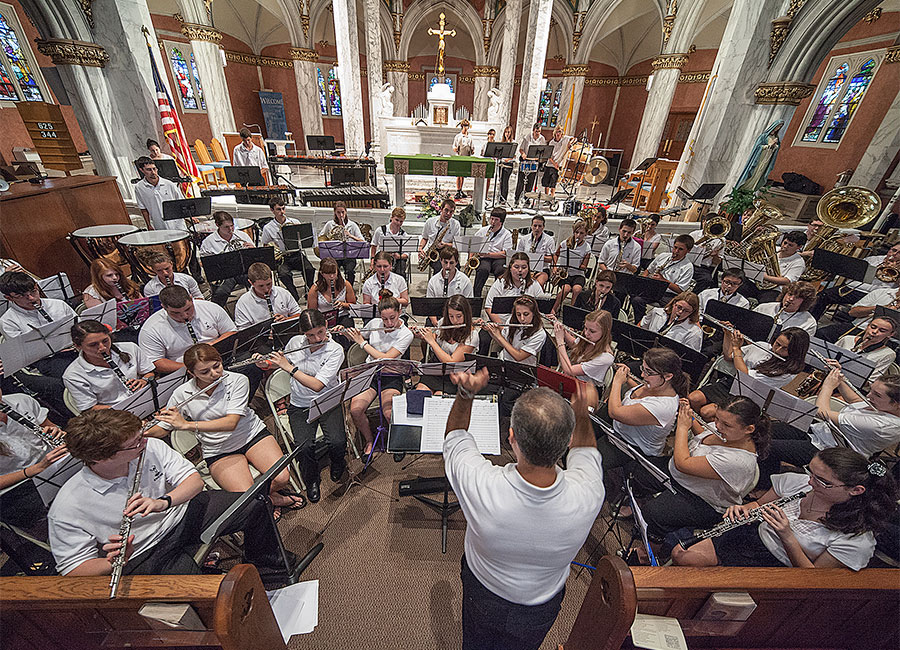
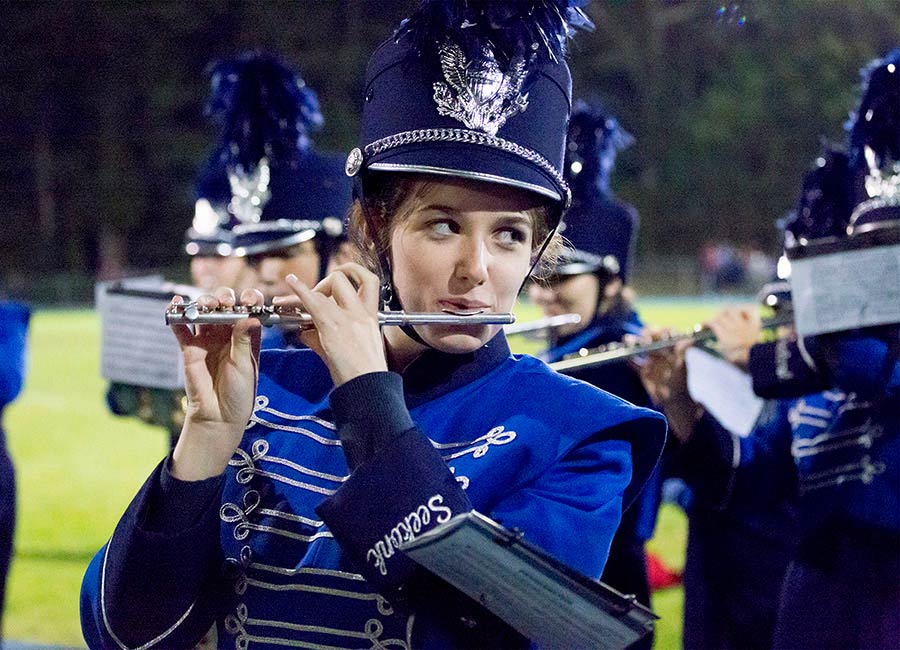
Comments OffTags: Daughter · Daughter Flute · Holidays · Music
I’ve been a longtime user of Adobe Lightroom, and I love it. I’ve been asked to give presentations on Lightroom at my photo club, and I sometimes use my notes from that session to share on bulletin boards on Reddit. So here it is, for my own reference:
Q: How is Lightroom different from Photoshop? Photoshop is for doing intensive manipulation of individual photos.
Lightroom is for managing your whole photo workflow, including:
Organize your photos
Develop your photos
Slideshows
Easy Printing
Web Galleries
Q: How is that different from Bridge?
The corrections are all the same that you can do with Adobe Camera RAW; I believe Bridge, Photoshop, and Lightroom all use the same Camera Raw. So those are more or less the same.
However, Lightroom is based on a database. Any changes you make to the photos are stored in the database, not the original image. Similar to the XMP files that Bridge uses, but more robust.
You can save develop settings as presets. And you can share presets with other users. I have a library of dozens of presets I have collected, and I can go from one to the next with just a click.
Like in iTunes playlist, you can make collections. An image can be in multiple collections. So you can organize your photos for projects. You can also make smart collections; so you can instantly collect in one place all your photos with a particular keyword, or multiple keywords: all your “four star” images taken in “london” with “Susan” in them. Or see what lenses you used the most in 2011.
But probably the biggest difference from Bridge is virtual copies. You can replicate an image over and over without actually replicating the file. That way, you can try different processing variations and compare them side by side.
There’s also a printing module which is useful if you print your own photos. I used to save off .psd’s at different aspect ratios, creating multiple files of my favorite images at 8×10, 5×7, etc. With Lightroom, it’s just a preset for each image size.
Comments OffTags: Photography (writing)
Someone on Flickr noticed that I uploaded some photos using the Sigma 50-200mm f4-5.6 DC OS HSM lens, and asked me what I thought about it. I always find it so hard to answer these kinds of questions. Obviously, a $160 lens is not going to be as sharp as an “L” lens, or as fast as a 2.8 lens. The question becomes, is it “good enough” for what I want to use it for.
I bought the lens for the Jon Stewart “Rally to Restore Sanity” rally in 2010. I also brought it on a family trip to Florida, and I shot a Brown commencement with it. All of these were outdoor, casual uses. From my point of view, if I’m shooting serious stock, I’m going to use my big gear: the 5DMII and Canon L glass. I got the Sigma because I wanted a low-price lens for casual travel snapshots. I also thought it would be good for family hikes. At $160, it was not a big investment, so it seemed worth a shot.
This lens creates a nice compact, light combination when paired with my Canon 20D. The 50-200 range is very, very useful on a 1.6x crop sensor body; you can get from moderate telephoto/portrait at the 50mm range to significant telephoto at the 200mm lens.
Is the lens sharp in the 100-200 range? Well, looking at some examples a medium apertures, I would say it was sharp enough for my purposes. Would it be sharp wide open indoors? Maybe sharp enough. Would I use it for indoor sports? I would not, as I have a 70-200 f/2.8, so I guess I can’t answer that question. Unfortunately, I’m just not the kind of guy who’s going to do all kinds of objective tests to find out exactly how a lens performs, so this is not that kind of review.
Overall, I think it’s a great lens for the money. I mean, as far as telephoto lenses go, it’s about as cheap as you will find. It’s small and compact and light, which are really important to me in some situations. It’s not very fast, though, either in aperture and focus speed. And the bokeh looks a little funny to me.
Anyway, seeing is believing. I posted some samples at 100% size; please use them for reference only, do not use them for publication of any kind. Also, here are my Flickr photos using this lens.
Comments OffTags: Photo Gear
This question comes up a lot on online forums: “I’m new to photography. What are some good subjects to photograph? How do I come up with subjects?”
The short answer is shoot what interests you, shoot what you can get to. Almost any subject can become a photo project. Shoot that subject frequently, at different times of day and different times of the year. The subject can be a community of people, a place, or a thing or collection of things. Here are a few random examples:
Looking at other people’s work can give you ideas. Join a site like Flickr and see what other people are shooting that interests you.
Subscribe to a (print) magazine like Popular Photography; every issue has lots of ideas.
The book Photo Idea Index has lots of self-assignments for shoot ideas.
Join a local photography club.
Comments OffTags: Photography (writing)
I hang around a lot (too much) in online forums, and this question comes up all the time. A beginner photographer is new to the hobby and would like advice on what DSLR to choose.
If you are buying new: Of course Canon and Nikon are the most popular brands; they have the lion’s share of the market and they make fine equipment. You can’t go wrong choosing either one, see which brand feels right to you and which model fits your budget. If you have friends who shoot one or the other, it might make sense to pick that brand because you can borrow/share lenses and equipment. Personally, I was borrowing Canon DLSR’s since they came out, so I was familiar with Canon and everybody I knew at the time shot Canon, so that’s what I bought. Personally, I like the thumbwheel on the back that can be found on the x0D line of cameras, I have always owned Canons with the thumbwheel.
If you are on a tight budget and if you have no particular reason to go Canon or Nikon, I can recommend Pentax line, it has very good value for the money across the line, and the top-end Pentax cameras are as good as anything out there. Plus, the Pentax lens mount has not changed in decades, so there are loads of older manual focus lenses that will fit on it. Pentax offers some sweet and useful lenses such as the Pentax DA 40mm f/2.8 ultra compact lens. Be aware, though, that while Pentax has superb sensors, the line currently has no full-frame sensor bodies available. If you really think you will be pursuing serious fine-art photography or go pro at some point, you might want to stick with Canon or Nikon for this reason. Although I think for most hobbyists, this should not be a consideration.
If you don’t mind buying used, I generally recommend Canon 20D or 30D (not D30). The 20D and 30D are about the oldest DSLR’s that are really good (they are very similar models, although the 30D has a larger LCD). I do recommend that you avoid anything older than the 20D: this would include the Canon D30, D60, and 10D, as they have very slow buffers and a startup lag (they can take one to three seconds to “turn on”). Here is a Canon DSLR timeline to help you tell them apart.
Be aware that Canon has a (not well-publicized) “Canon Loyalty Program” which allows Canon owners (in North America, at least) to send their used (or even broken) DLSR to Canon in exchange for a significant discount on a refurbished Canon product (approx US$200). This tends to put a floor on the market for used Canon cameras, since they always have a trade-in value of around $200. Don’t expect to find a used Canon DSLR of any vintage for under that price (or if you do, you could try calling Canon to get the trade-in yourself).
As far as used Nikon bodies go, I’m not very familiar with them, so I can’t really comment on specific Nikon models.
Comments OffTags: Photography (writing)
A billionaire, tea party guy, and union member are sitting at a table with a dozen donuts. The billionaire scoops up 11 donuts and says to the tea party guy, ‘watch out, that guy is trying to take your donut.’
Comments OffTags: As seen on the Internet
I’m not convinced that longer incumbency equals greater (what exactly is the problem?) incompetence or poor performance. In fact, I think surveys have shown that the most bipartisan and effective members tend to be the ones who have been there the longest (Alan Simpson and Ted Kennedy come to mind). The most partisan members tend to be the new ones — just look at the current crop of “tea party” freshmen who are blocking everything.
2ndly, term limits are inherently undemocratic. Congresspeople regularly come before their consitiuents for re-election; why shouldn’t people be allowed to vote for someone they like? If you want to take aim at a branch of government that is filled with deadwood, take a look at the Supreme Court. I would support 25-year term limits for Supreme Court members, who currently cannot be removed no matter how incompetent they are.
Comments OffTags: Politics
An image of mine was recently used in a Salon.com article about distaste. Apparently broccoli wasn’t quite right, but they still used my model, who of course is my daughter. That’s another few bucks into the college fund.

Original image available here:
Comments OffTags: Photography (in use)
Wife’s friends G and P hosted a lovely holiday party. Here is a slideshow of pictures:
→ 2 CommentsTags: Holidays